You're on a ladder, under a sink, or halfway through a deep clean when the phone rings. You can't get to it. By the time you call back, the customer has already booked someone else. Most owners know this happens. Few know how often.
This post looks at what the numbers say about missed calls, what an AI receptionist actually does about it, and where it isn't the right fit.
How many calls go unanswered?
More than most owners would guess. Invoca's 2026 home services benchmark, built on more than 70 million tracked calls, found that only 52% of callers to home services businesses spoke with a person. Even after filtering out quick hang-ups and misdials, the answer rate for calls longer than 30 seconds was 73%. That still means roughly one real caller in four never reached anyone.
You'll see other figures online, like "62% of calls go unanswered" or "85% of people never call back". Be careful with those. They usually trace back to small studies or to vendors selling answering services. The Invoca data is big enough to trust, and it tells the same story: a lot of calls never reach a person.
Why a missed call costs more than it looks
Someone calling a restoration company at 2am, or a pest control company about wasps by the front door, has a problem now. They aren't going to wait for a callback. They'll try the next business on Google. The same is true for a worried daughter calling home care agencies at 9pm, or a homeowner ringing three cleaning companies on a Saturday morning. Whoever answers first usually gets the job.
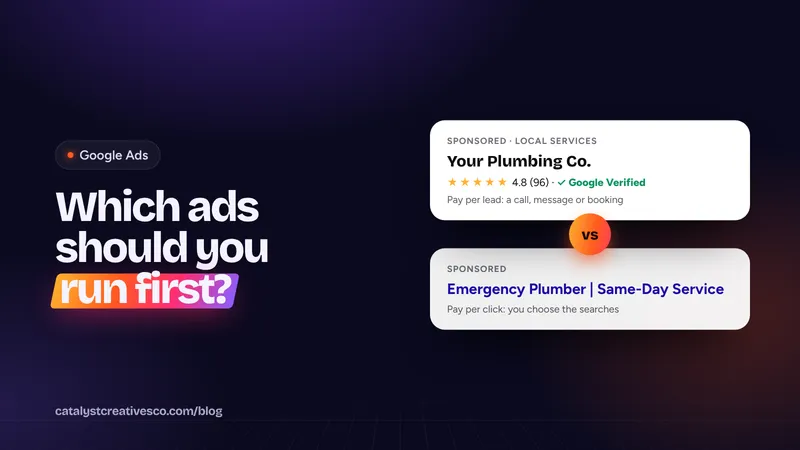
And when you're paying for ads, a missed call is a lead you paid for and threw away. Since October 2026, Google Local Services Ads can even charge for missed calls during business hours when the caller stays on the line for more than 20 seconds.
What an AI receptionist does
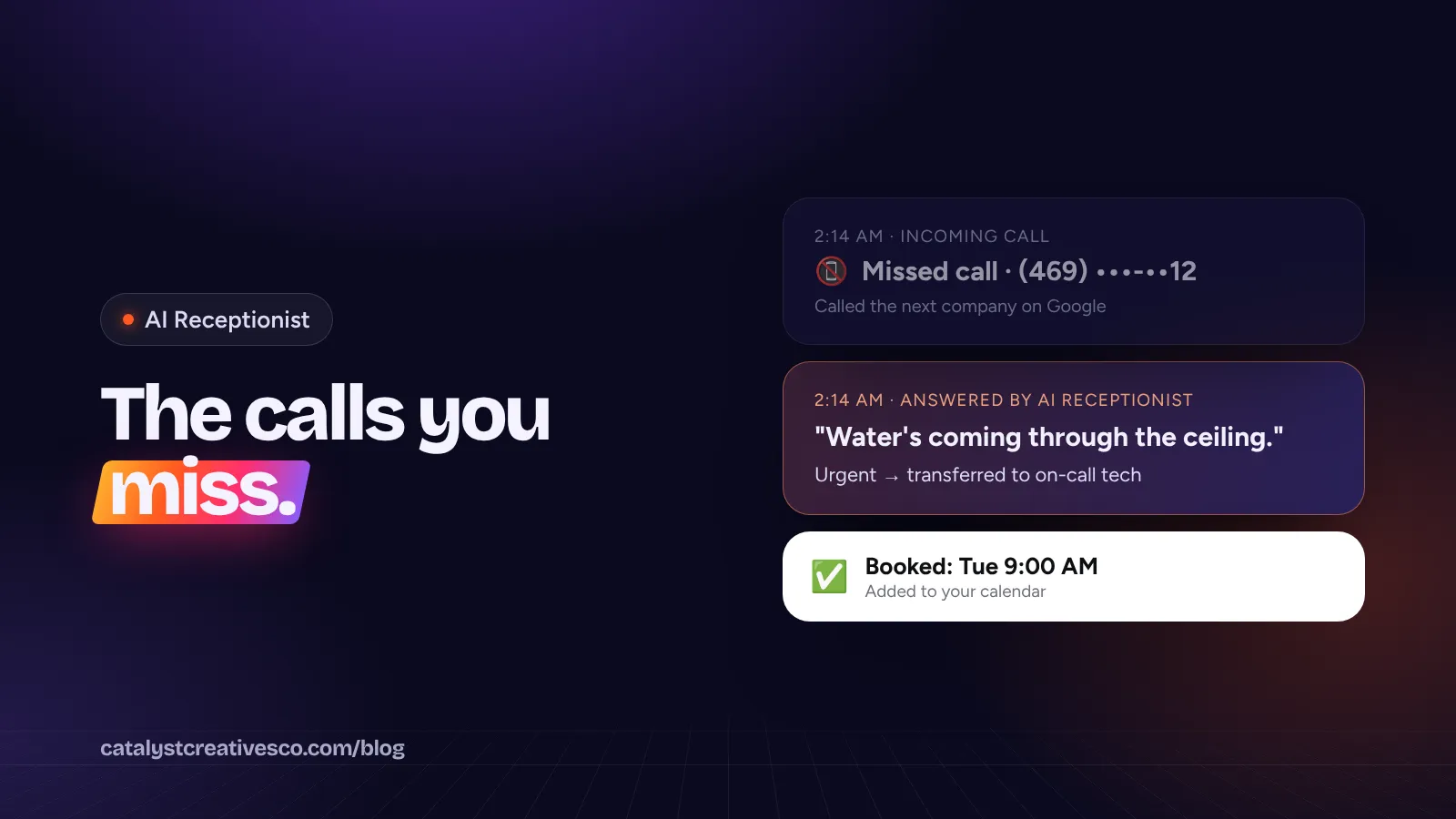
An AI receptionist is a voice assistant that answers your business line when you can't, and talks to callers in natural, spoken conversation. A good setup can:
- Answer every call, day or night, including weekends, holidays and the minutes when your whole team is on jobs.
- Answer the common questions using information you give it: services, areas, hours, what an inspection includes, how a first visit works.
- Book the job straight into your calendar or job software, so the caller hangs up with an appointment.
- Pass urgent calls to a person right away when they match the rules you set, like active water damage or a current client.
- Speak more than one language, which matters in a lot of the markets we work in.
- Send you a summary of every call, so nothing gets lost.
The point isn't to replace your front desk. It's to catch the calls that would otherwise go to voicemail and to a competitor.
What it doesn't do (and shouldn't)
- It doesn't replace judgment. Pricing a complex remodel, handling an upset client, or talking a family through care options should go to a person. A good setup knows when to hand off.
- It only knows what you teach it. If your services, areas or policies are vague, its answers will be too. Setup is mostly about writing down how your business actually works.
- It isn't for collecting sensitive details. For clinics especially, keep it to booking and general questions. Health information should stay out of it.
- It isn't for cold-calling. Answering calls that come in is very different from making outbound calls. The FCC ruled in February 2024 that AI-generated voices count as "artificial" voices under federal robocall rules, so outbound AI calling comes with strict consent requirements.
Is it right for your business?
It's usually worth it if any of these sound familiar:
- You or your techs are on jobs during the hours most calls come in.
- You get calls after hours or on weekends, and some of them are urgent.
- You're paying for ads or Local Services Ads and can't always answer quickly.
- Your front desk is swamped at certain times, like lunchtime at a clinic or Monday mornings for a cleaning company.
It's probably not worth it yet if you get very few calls, or you already have someone who reliably answers every call, every hour you're open, and you don't take after-hours work.
Find out how many calls you're missing
Before you buy anything, measure it. Most phone systems and call tracking tools show missed calls. Look at a normal month: how many calls went unanswered, and when? Then pick up your own phone and call your business at 7pm on a weekday. What happens is what your customers hear.
Answering every call also does more for you once ads are running. If you're weighing that up, read Local Services Ads vs. Google Search Ads.
Want to hear what callers would get?
Our free Growth Needs Assessment looks at how your calls are handled today and where they're slipping through. If it's a fit, our AI receptionist service is set up around your services, areas and calendar, and hands calls to your team whenever a person should take over.