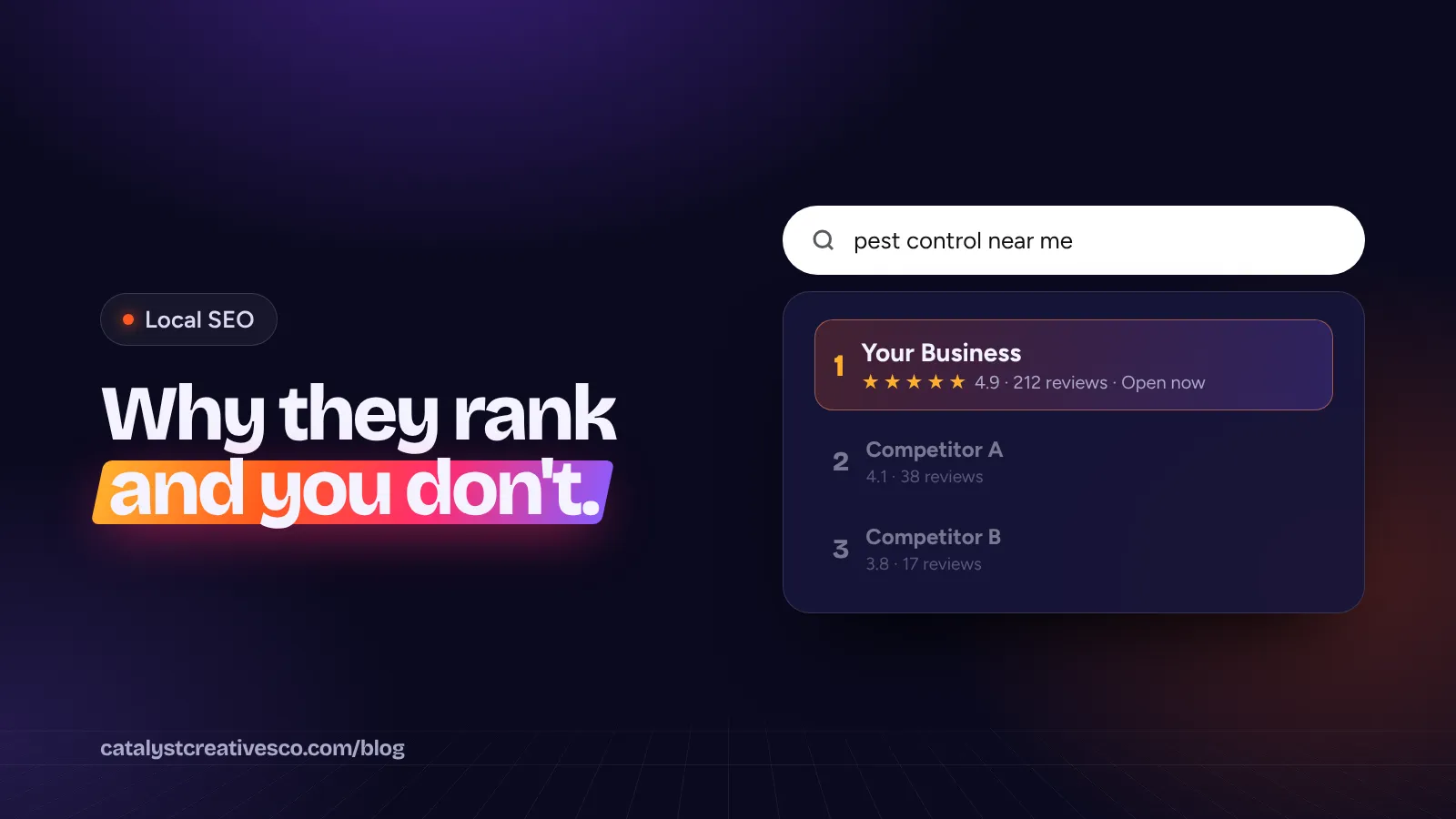
You do great work. Your customers say so. But when someone in your town searches "pest control near me" or "house cleaning near me", a competitor shows up first and you're nowhere on the first screen. That's not bad luck. Google ranks local businesses on a short list of things, and most of them are things you can fix.
This guide explains how Google decides who shows up, in plain English, and what to work on first.
The three things Google says it looks at
Google is unusually open about this. Its own help page says local results are mainly based on relevance, distance and prominence:
- Relevance: how well your business matches what the person searched for.
- Distance: how far you are from the person searching, or from the place they typed in.
- Prominence: how well known your business is, online and off. Google says more reviews and good ratings can help here.
Google also says there's no way to pay for a better spot in the free map results. The ads at the top are separate. Everything below them is earned.
You can't move your shop closer to every customer, so distance is mostly out of your hands. Relevance and prominence are where the work is.
What local SEO experts say matters most
Every year Whitespark asks dozens of local search specialists to score the factors behind local rankings. The latest Local Search Ranking Factors survey puts these at the top for the map results:
- Your Google Business Profile, the box with your hours, photos and reviews that shows up in Maps. This is the biggest group of factors by a long way.
- Reviews: how many you have, how good they are, and how recent.
- Your website: whether your pages clearly say what you do and where you do it.
Links from other websites, listings on directories and how people interact with your listing all count too, but less. These are expert estimates, not numbers from Google. They line up with what we see in client accounts, though: the profile, the reviews and the website do most of the heavy lifting.
Why your competitor is ahead of you
When we look at a business that's losing the map results to a competitor, it's almost always one of these.
1. Their Google Business Profile is set up properly. Yours isn't.
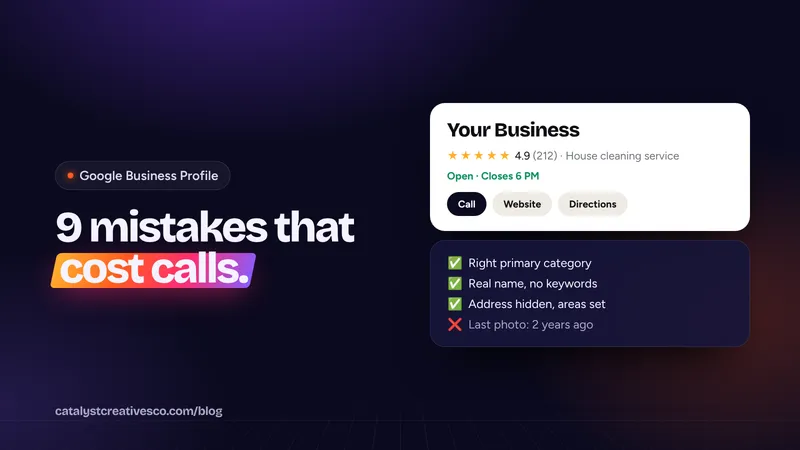
The most common gap is the primary category. If you're a restoration company listed as "Contractor" and your competitor is listed as "Water damage restoration service", Google has a much easier time showing them for water damage searches. Missing services, missing service areas, old hours and a handful of phone photos all add up. We cover the full list in our post on Google Business Profile mistakes that cost you calls.
2. They have more reviews, and newer ones
Reviews feed prominence, and customers lean on them hard. In BrightLocal's 2026 survey of US consumers, 74% said they only pay attention to reviews from the last three months. A business with 40 reviews from this year usually beats one with 120 reviews that stopped in 2023.
3. Their website has a page for the job you want
If someone searches "termite inspection" and your site has one page that lists "general pest, termites, rodents, mosquitoes", you're asking Google to guess. A competitor with a proper termite inspection page, explaining what's included, which towns they cover and how to book, gives Google a clear answer. One strong page per main service is one of the most reliable fixes in local SEO.
4. Their business details match everywhere
Your business name, address and phone number should be the same on your website, your Google profile, Facebook, Yelp, the BBB and the industry directories. When they don't match, because of an old phone number or a move a few years ago, it muddies the picture. It's boring work, and it helps.
5. Other local websites mention them
A link from the local chamber of commerce, a supplier, a charity you sponsor or a local news story tells Google you're a real, known business in that area. You don't need hundreds of links. A handful of real local ones beats a pile of junk links every time.
What to fix first
If you only have a few hours, do it in this order:
- Check your Google Business Profile category. Search your main service in Maps and see what category the top three businesses use. Pick the closest accurate match for your primary category.
- Fill in every section of the profile. Services, service areas, hours, a real description and recent photos of real jobs.
- Start asking every happy customer for a review, this week and every week. Steady beats a burst.
- Make sure your website has one page for each main service, with the towns you cover and a clear way to call or book.
- Fix your business details on the big directories so they match your Google profile exactly.
How long it takes
Profile fixes can show up within weeks. Climbing for competitive searches like "plumber near me" in a big metro usually takes a few months of steady work. Anyone promising you the #1 spot in 30 days is guessing, or doing something that will get your profile suspended.
The good news is that most local competitors aren't doing this well either. Getting the basics right, then staying consistent with reviews and content, is enough to win in a lot of towns.
Want us to look at yours?
Our free Growth Needs Assessment checks your Google profile, website and reviews against the businesses beating you in your area, and tells you what to fix first. If you'd rather hand it off, that's what our local SEO service is for.