A lot of local service websites look fine and still don't book work. The owner paid for a nice design, the photos are good, and the phone still doesn't ring. Usually the problem isn't how the site looks. It's that the site makes people work too hard to do the one thing they came to do: call you, or ask for a quote.
Here's what a website for a cleaning company, pest control business, restoration crew, remodeler, home care agency or clinic needs to turn visitors into booked jobs.
1. It loads fast on a phone
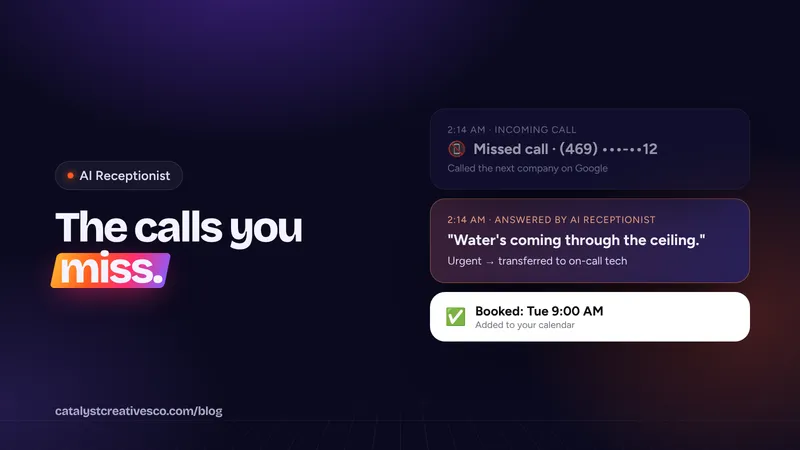
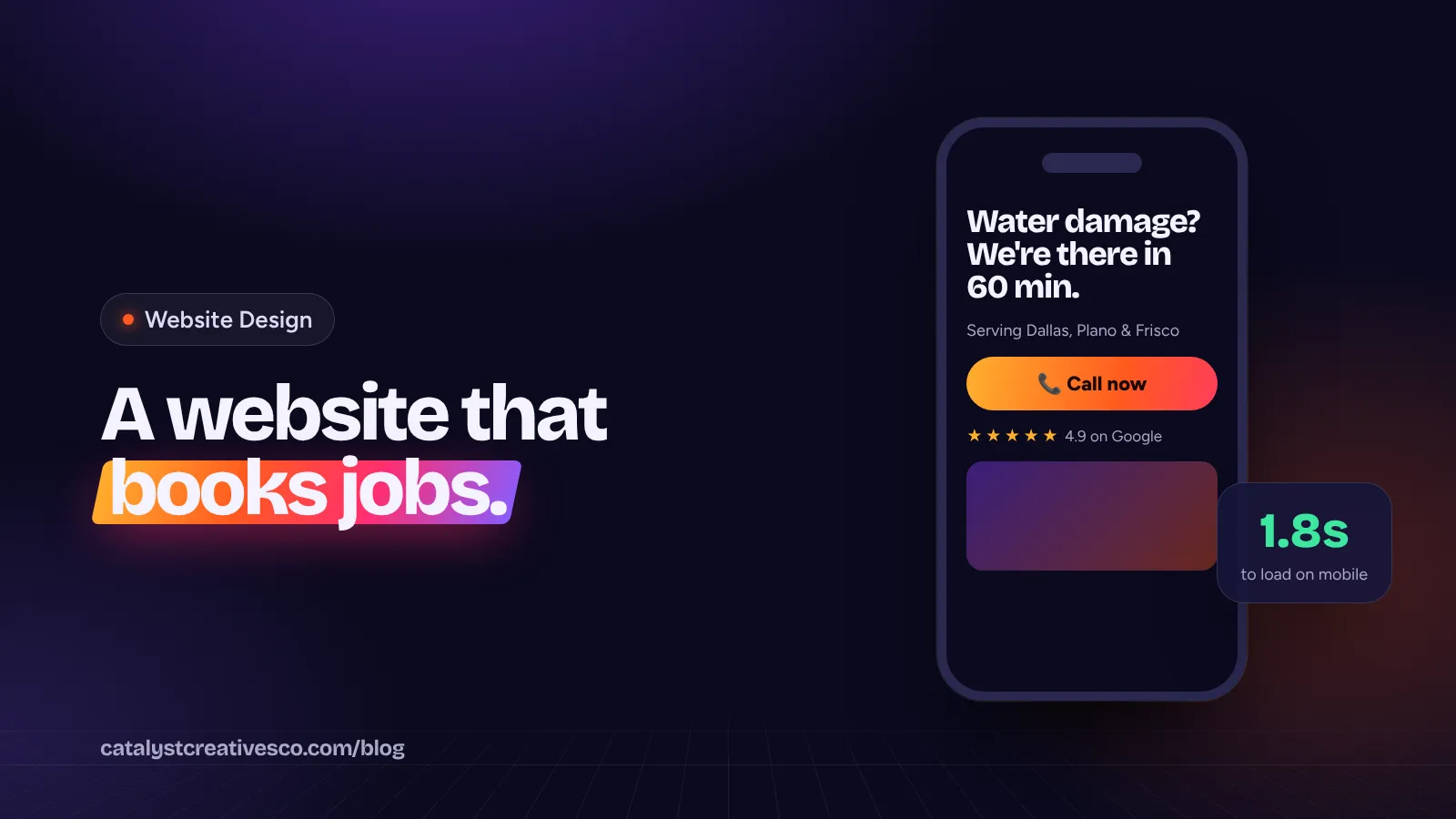
Most of your visitors are on a phone, often on a patchy connection, often in a hurry. Someone with water coming through the ceiling won't wait for a slow page. They'll hit back and call the next company on the list.
Google measures speed with three numbers called Core Web Vitals. A good page should show its main content within 2.5 seconds, respond to a tap within 200 milliseconds, and not jump around while it loads. You can check yours for free at PageSpeed Insights.
Common culprits: huge uncompressed photos, auto-playing background videos, a dozen plugins, chat widgets and pop-ups all loading at once.
2. The phone number is one tap away
On a phone, your number should be a tap-to-call button that's always in reach, not text buried in the footer. For urgent trades like restoration and pest control, put a "Call now" button at the top of every page. For planned work like remodeling, a "Get a quote" button may matter more. Either way, the next step should never be more than a thumb away.
3. Visitors know in five seconds what you do and where
The top of your homepage should answer three questions without scrolling:
- What do you do? ("Water damage restoration", not "Restoring peace of mind")
- Where do you do it? (The towns or area you cover)
- What should I do next? (Call, book, or get a quote)
Clever slogans are fine further down. The first screen is for clarity.
4. One page for each main service
If you offer recurring cleaning, deep cleans and move-out cleans, each one deserves its own page. The same goes for termite, rodent and mosquito work, or kitchens, bathrooms and basements. Separate pages help in two ways:
- People land on exactly what they searched for, with the details they need to decide.
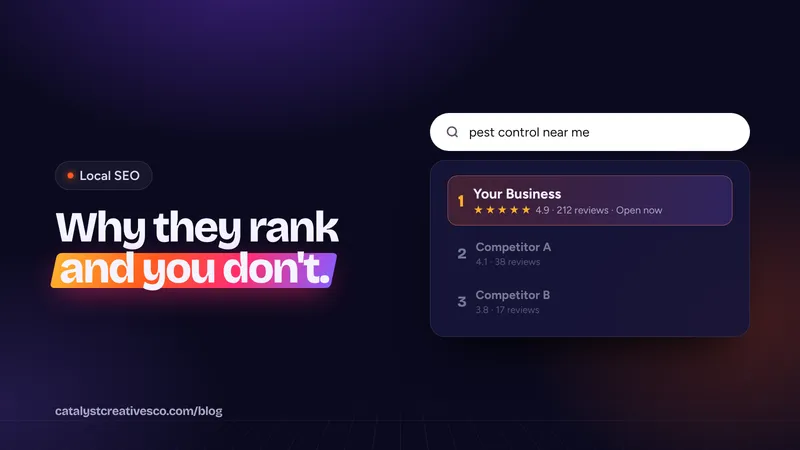
- Google understands what you do much better, which helps you show up for those searches. It's one of the main reasons competitors outrank each other, as we explain in why your competitor shows up on Google and you don't.
5. Proof near every button
Before people call a stranger into their home, they want to know you're real and you're good. Put proof where the decision happens, not on a separate testimonials page nobody clicks:
- Your Google rating and a few real reviews
- Photos of real jobs, your crew and your vans
- License and insurance details where they matter in your trade
- Your service area and how long you've been doing this
Reviews carry a lot of weight. In BrightLocal's 2026 survey, 68% of consumers said they'd only use a business with four stars or more.
6. Short forms that ask for what you need
Every extra field on a form loses people. Ask for what you need to call them back and quote: name, phone, email, the service, and maybe a ZIP code or a short note. Save the 15-question intake for after they've talked to you.
Then make sure someone sees that form fast. A quote request that waits until tomorrow morning often goes to whoever replied first.
7. It's easy to use for everyone
Readable text sizes, strong contrast, buttons big enough for a thumb, image descriptions for screen readers, and forms that work with a keyboard. Many of your customers are older homeowners or adult children arranging care for a parent. A site that's easy to use for them is easier for everyone.
8. You can see what it's doing
If you can't tell how many calls and form fills the website brought in last month, you can't tell whether it's working. At minimum, set up Google Analytics with the form submissions tracked, and use call tracking so you know which calls came from the website, the Google profile and the ads.
9. You own it
This one surprises people. Some website companies keep the domain, the hosting account or the site itself in their own name, so if you leave, the site goes with them. Make sure your domain is registered to you, you have the logins, and the contract says the site is yours.
A quick self-check
Open your website on your phone, on mobile data, and time it. Then ask yourself:
- Did it load in about three seconds or less?
- Could I tap to call without scrolling?
- Would a stranger know what I do and where in five seconds?
- Is there a page for each of my main services?
- Can I see real reviews near the buttons?
Every "no" is a leak where jobs are slipping away.
Want us to check yours?
Our free Growth Needs Assessment includes a look at your website on a phone, with a short list of what's costing you calls. If it needs a rebuild, our website design service builds sites on WordPress, Wix, Webflow or custom code in about 10 to 18 days, and you own everything.